Chongqing Zhonggu Blower Co., Ltd. welcomes you!



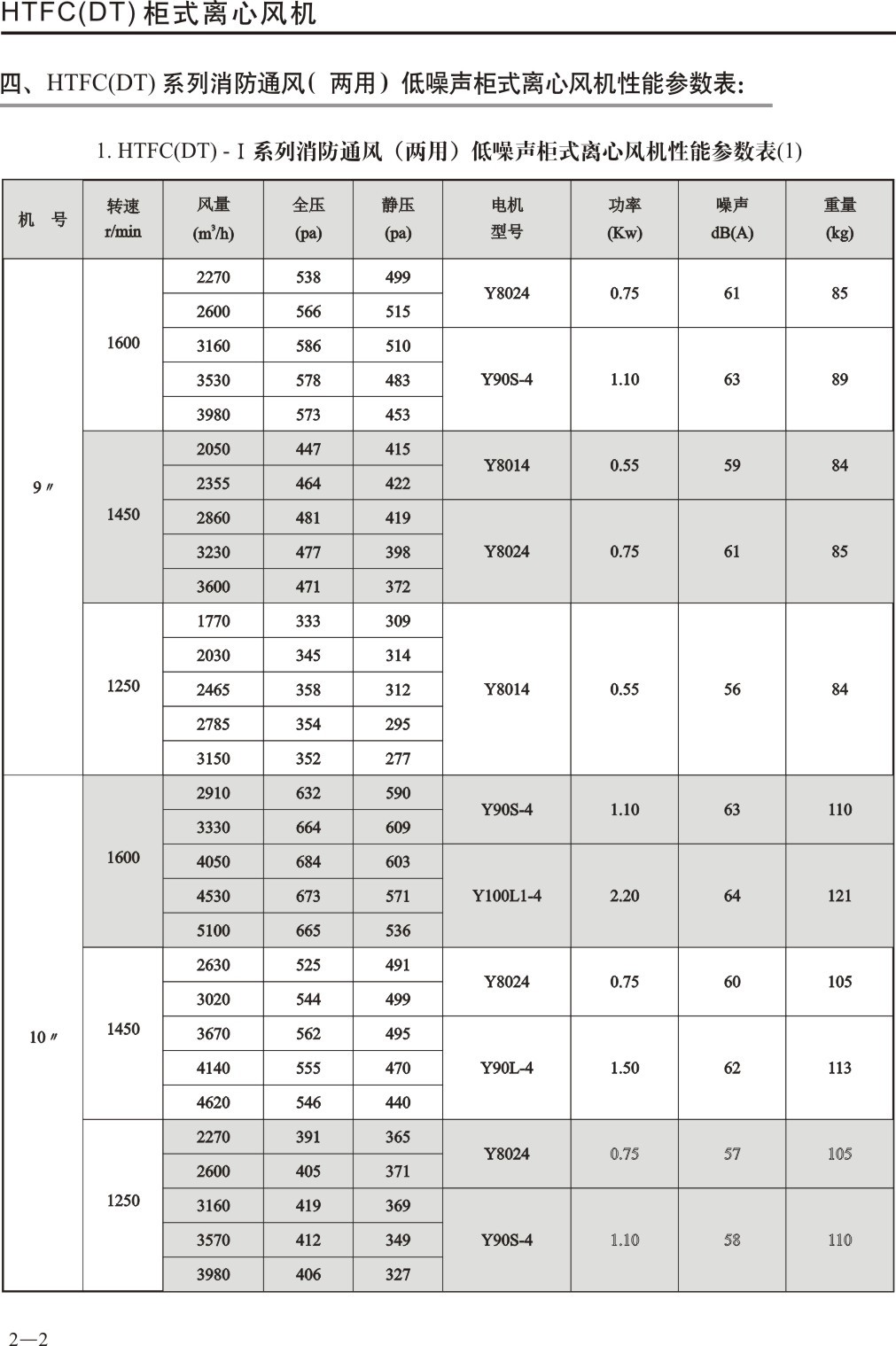
HTFC Fireproof Cabinet-Type Centrifugal Fan
Keywords:
Category:
Civilian General-Purpose Fan
- Product Description
-
- Commodity name: HTFC Fireproof Cabinet-Type Centrifugal Fan
- Commodity ID: 1011551377639170048
A centrifugal fan is a machine that, by means of mechanical energy input, increases gas pressure and conveys gas; it is a type of driven fluid‑handling machinery. Centrifugal fans are widely used for ventilation, dust removal, and cooling in factories, mines, tunnels, cooling towers, vehicles, ships, and buildings; for ventilation and draft in boilers and industrial furnaces; for cooling and ventilation in air‑conditioning equipment and household appliances; for drying and conveying grains; and for providing wind‑tunnel airflow as well as inflating and propelling hovercrafts.
A centrifugal fan is a machine that, by means of mechanical energy input, increases gas pressure and conveys gas; it is a type of driven fluid‑handling machinery. Centrifugal fans are widely used for ventilation, dust removal, and cooling in factories, mines, tunnels, cooling towers, vehicles, ships, and buildings; for ventilation and draft in boilers and industrial furnaces; for cooling and ventilation in air‑conditioning equipment and household appliances; for drying and conveying grains; and for providing wind‑tunnel airflow as well as inflating and propelling hovercrafts.
Centrifugal fans operate on the principle of converting kinetic energy into potential energy: a high-speed rotating impeller accelerates the gas, which is then decelerated and redirected to transform its kinetic energy into pressure energy. In a single-stage centrifugal fan, gas enters the impeller axially, changes to a radial flow as it passes through, and then enters the diffuser. Within the diffuser, the gas’s flow direction is altered and the cross-sectional area increases, causing the flow to decelerate; this deceleration converts kinetic energy into pressure energy. The primary pressure rise occurs in the impeller, with additional gains occurring during the diffusion process. In multi-stage centrifugal fans, return vanes guide the airflow into the next impeller stage, enabling the generation of higher pressures.
The operating principle of a centrifugal fan is essentially the same as that of a turbocompressor: since the gas velocity is relatively low and the pressure changes are small, it is generally not necessary to account for variations in gas specific volume; thus, the gas can be treated as an incompressible fluid.
Centrifugal fans can be manufactured in two configurations: right-hand rotation and left-hand rotation. When viewed from the motor side, if the impeller rotates clockwise, it is designated as a right-hand rotating fan; if the impeller rotates counterclockwise, it is designated as a left-hand rotating fan.
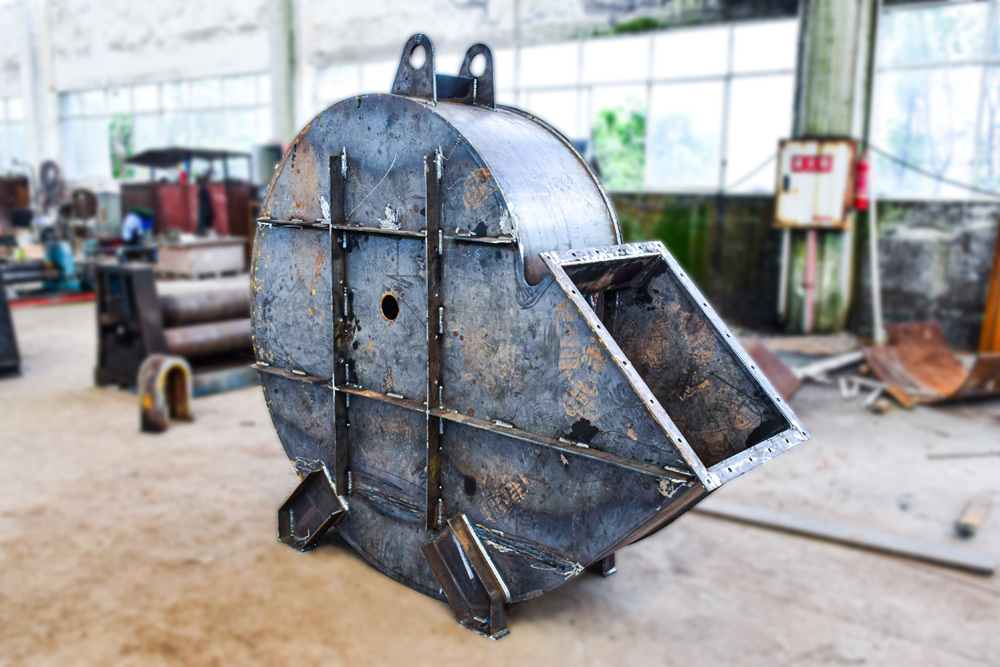
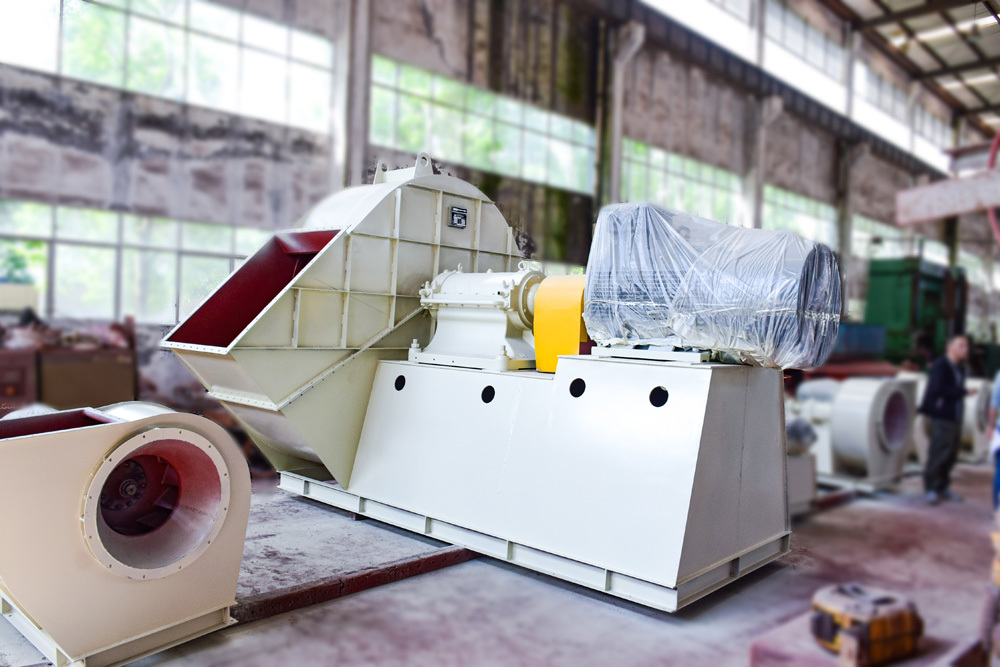
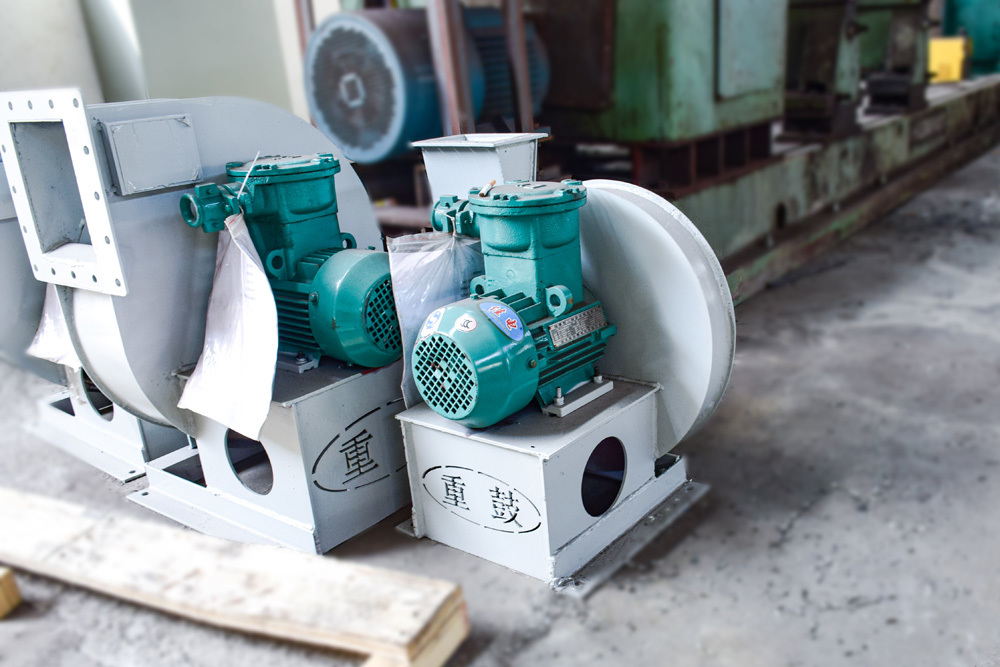
A centrifugal fan consists of a casing, a main shaft, an impeller, a bearing and transmission mechanism, and an electric motor.
Casing: Constructed from steel plates, it is robust and reliable, available in either an integral or semi-open design; the semi-open configuration facilitates maintenance.
Impeller: It consists of blades, a curved front disc, and a flat rear disc.
Rotor: It shall have undergone both static and dynamic balancing to ensure smooth rotation and satisfactory performance.
Transmission assembly: Comprises a main shaft, bearing housing, rolling bearings, and a pulley (or coupling).
 Key words:
- 离心风机
Leave a message for inquiry
Thank you for visiting. If you have any other questions, please leave us a message, and we’ll get back to you as soon as possible!
Chongqing Zhonggu Blower Co., Ltd.
National Service Hotline:
023-67657723/023-67657724
023-45267099/023-45262099
Business Phone:
023-67657723/023-67666438/023-67662725
Technical Department:023-67662824
Finance Department:023-67666428
Fax:023-67662824/023-45268099
Email:cqgfjc@cqgfjc.com
Address: Floors 1–4, Building 1, No. 1 Yudai Mountain, Liangjiang New Area, Chongqing City
Production Address: No. 66, Industrial Avenue, Tongliang District, Chongqing City
Scan to browse the mobile website
Online Customer Service