Chongqing Zhonggu Blower Co., Ltd. welcomes you!



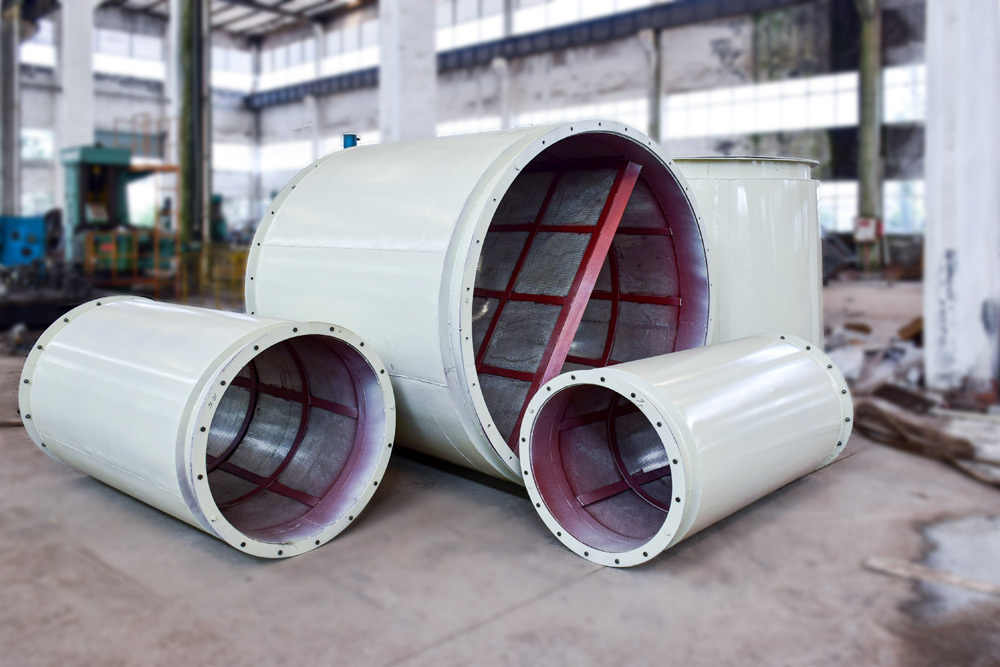
Fiberglass axial flow fan
Keywords:
Category:
Civilian General-Purpose Fan
- Product Description
-
- Commodity name: Fiberglass axial flow fan
- Commodity ID: 1011551212689776640
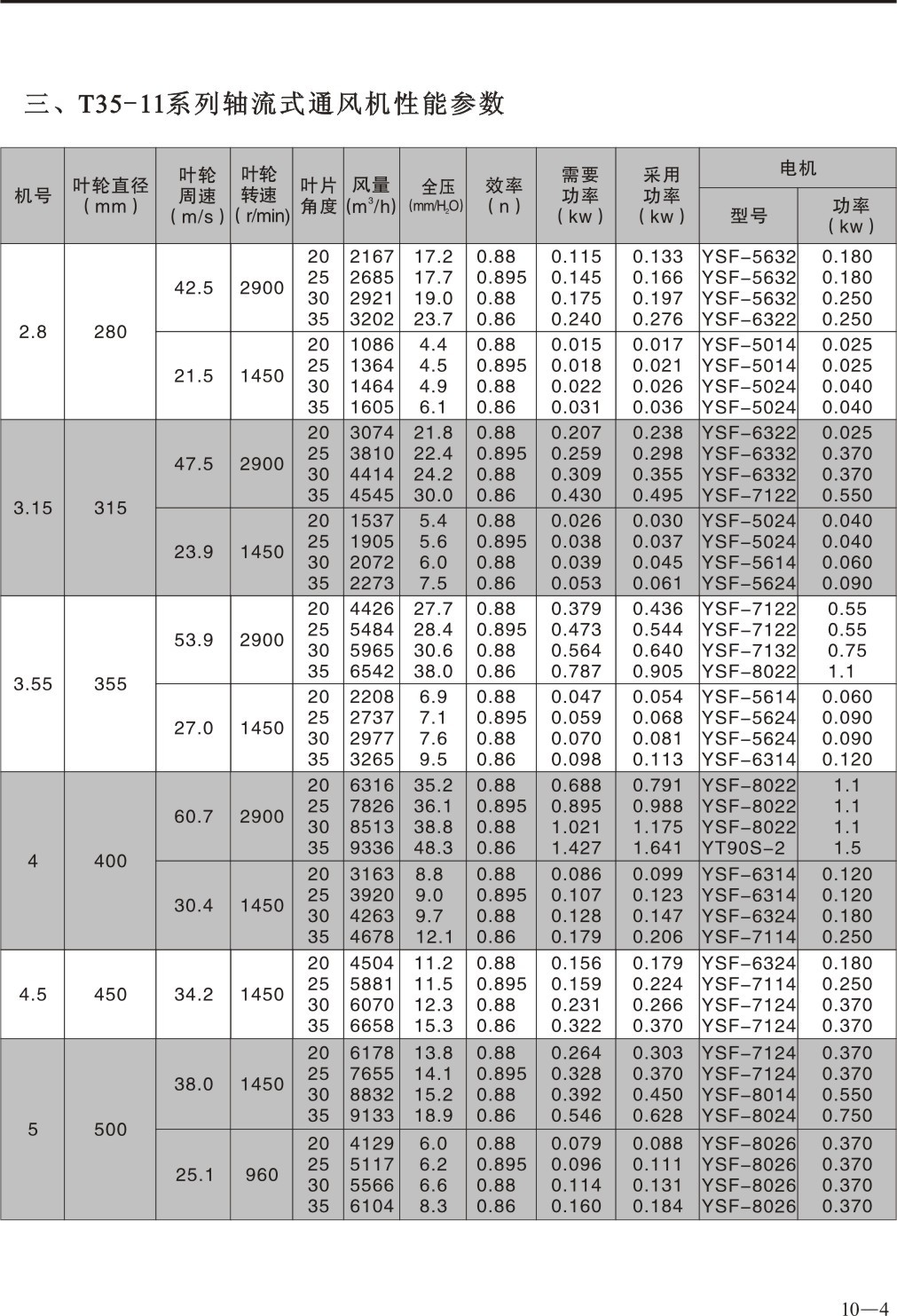
Axial fans are widely used; they move air in a direction parallel to the fan blade axis. Examples include electric fans and the outdoor-unit fans of air conditioners, which operate as axial-flow fans. The term “axial‑flow” refers to the fact that the airflow is parallel to the fan’s shaft. Axial‑flow fans are typically employed in applications requiring high flow rates but relatively low pressure.
Axial fans are widely used; they move air in a direction parallel to the fan’s shaft, as seen in electric fans and the outdoor-unit fans of air conditioners. They are called “axial‑flow” because the airflow is aligned with the fan’s axis. Axial fans are typically employed in applications that demand high flow rates but relatively low pressure. They operate in a fixed position to propel air. An axial fan consists primarily of an impeller and a housing; while its design is simple, it places very stringent demands on performance data.
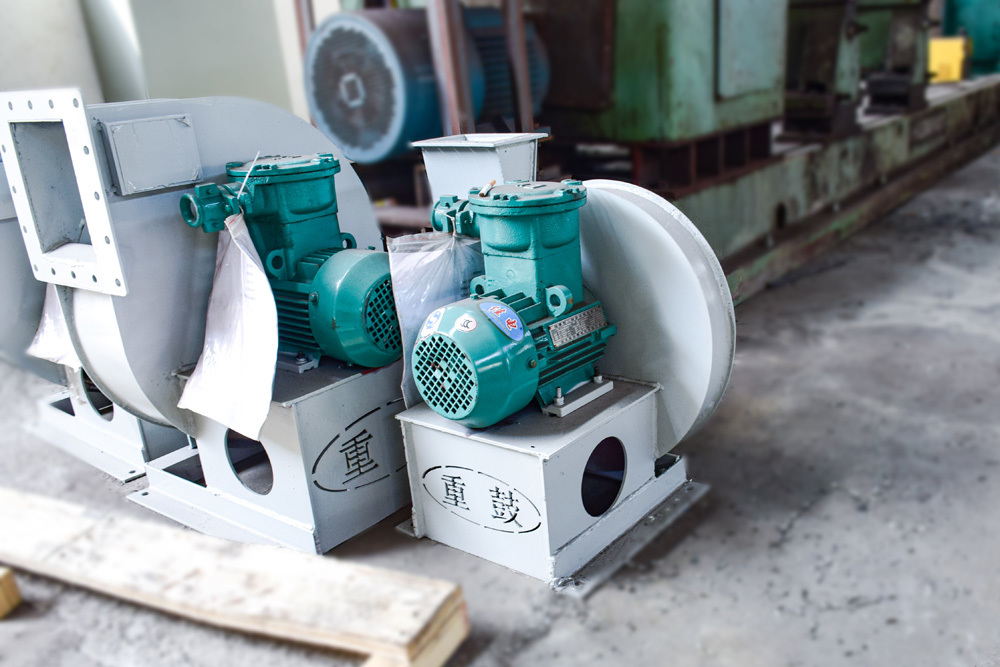
Standard axial flow fans are suitable for ventilation and air exchange in typical settings such as factories, warehouses, offices, and residential spaces. They can also be used with air coolers, evaporators, condensers, spray cooling systems, and more. Additionally, there are mining‑grade axial flow fans, as well as corrosion‑resistant and explosion‑proof models, which incorporate corrosion‑resistant materials and explosion‑proof measures and are equipped with explosion‑proof motors. These specialized fans are designed for conveying explosive, volatile, and corrosive gases.
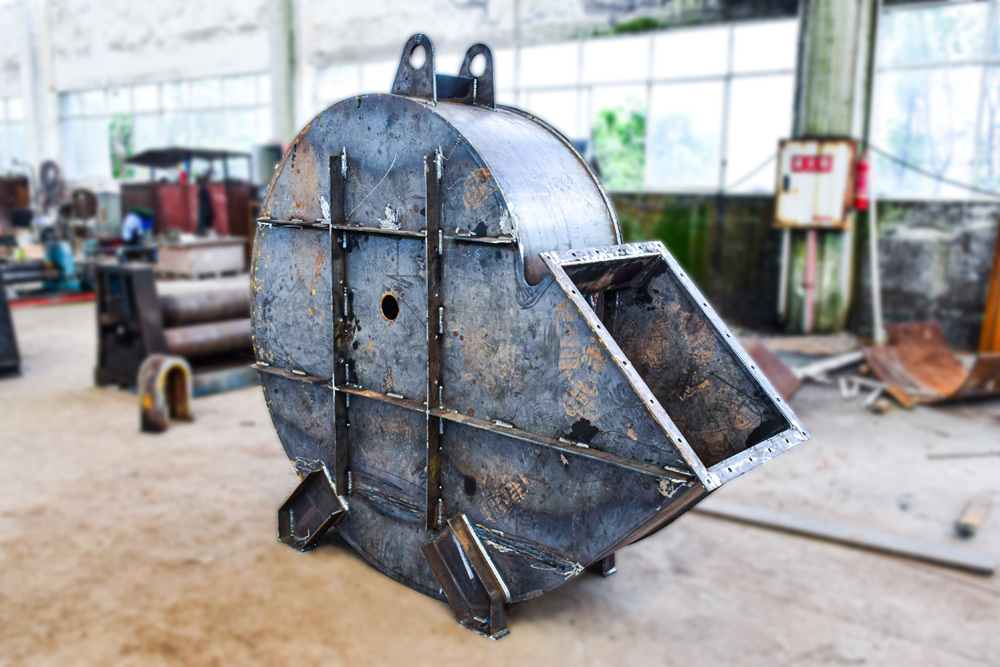
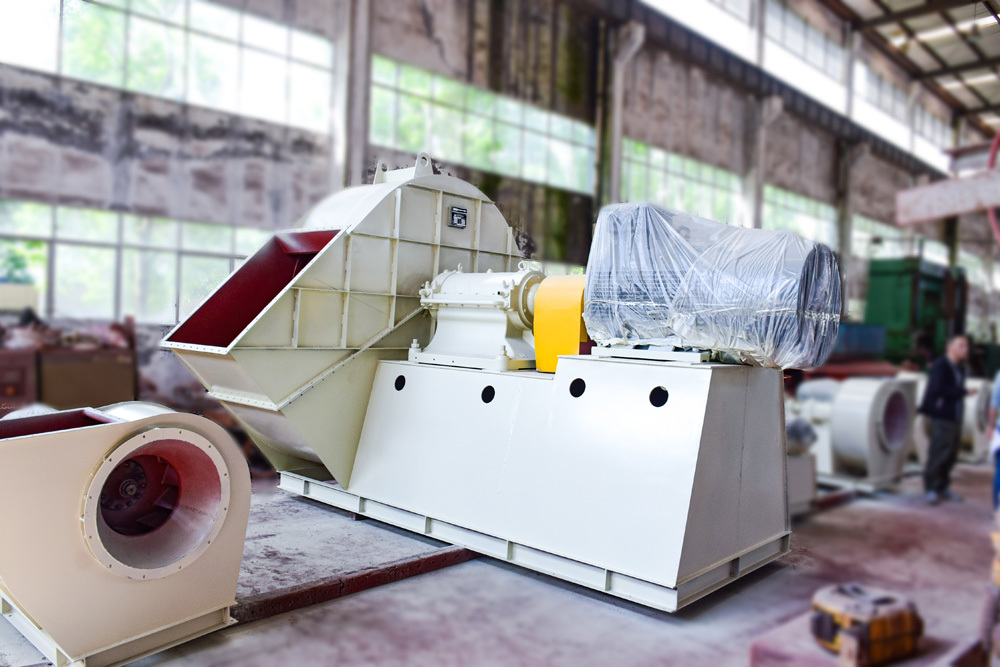
The gas conveyed by the axial fan must be free of significant dust, as well as viscous and fibrous substances. For direct‑drive motors, the operating temperature shall not exceed 40°C; for belt‑driven units, it shall not exceed 60°C. The dust concentration in the conveyed gas must not exceed 150 mg/m³. An axial fan primarily consists of an impeller, a casing, and an electric motor, with the frame constructed from structural steel and connected to the casing’s air duct. In corrosion‑resistant models, both the impeller and the casing are made of fiberglass reinforced plastic, whereas other types of axial fans are typically fabricated from steel plates.
Working principle
As the impeller rotates, gas enters the impeller axially through the inlet and is accelerated by the blades, increasing its energy. It then flows into the guide vanes, which redirect the flow to an axial direction while guiding it into the diffuser, where the kinetic energy of the gas is further converted into pressure energy. Finally, the gas is discharged into the service pipeline.
The operating principle of an axial-flow fan blade is similar to that of an aircraft wing. However, whereas the latter generates lift upward on the wing to support the aircraft’s weight, the axial-flow fan remains stationary and moves the air.
The cross-section of an axial-flow fan is typically airfoil-shaped. The blades may be fixed in position or capable of rotating about their longitudinal axis. The blade angle relative to the airflow, as well as the blade spacing, can be either fixed or adjustable. Adjusting the blade angle or spacing is one of the key advantages of axial-flow fans. A smaller blade spacing and angle results in lower flow rates, whereas increasing the spacing yields higher flow rates.
 Key words:
- 轴流风机
Leave a message for inquiry
Thank you for visiting. If you have any other questions, please leave us a message, and we’ll get back to you as soon as possible!
Chongqing Zhonggu Blower Co., Ltd.
National Service Hotline:
023-67657723/023-67657724
023-45267099/023-45262099
Business Phone:
023-67657723/023-67666438/023-67662725
Technical Department:023-67662824
Finance Department:023-67666428
Fax:023-67662824/023-45268099
Email:cqgfjc@cqgfjc.com
Address: Floors 1–4, Building 1, No. 1 Yudai Mountain, Liangjiang New Area, Chongqing City
Production Address: No. 66, Industrial Avenue, Tongliang District, Chongqing City
Scan to browse the mobile website
Online Customer Service