Chongqing Zhonggu Blower Co., Ltd. welcomes you!



Chongqing Blower: GDF Duct Fan for Exhaust Applications
Keywords:
Category:
Civilian General-Purpose Fan
- Product Description
-
- Commodity name: Chongqing Blower: GDF Duct Fan for Exhaust Applications
- Commodity ID: 1011550961597767680
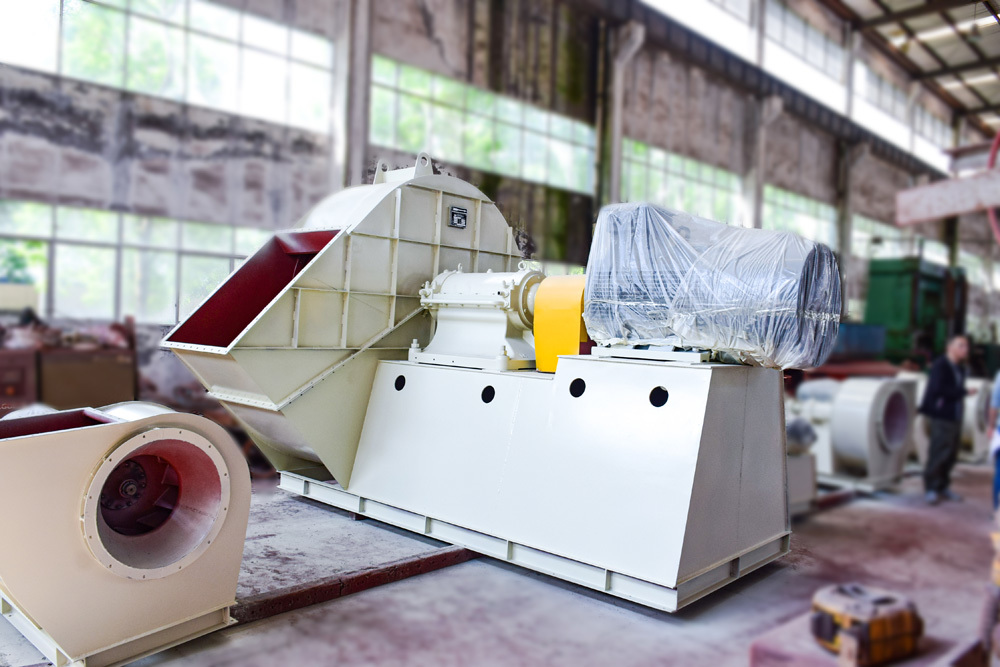
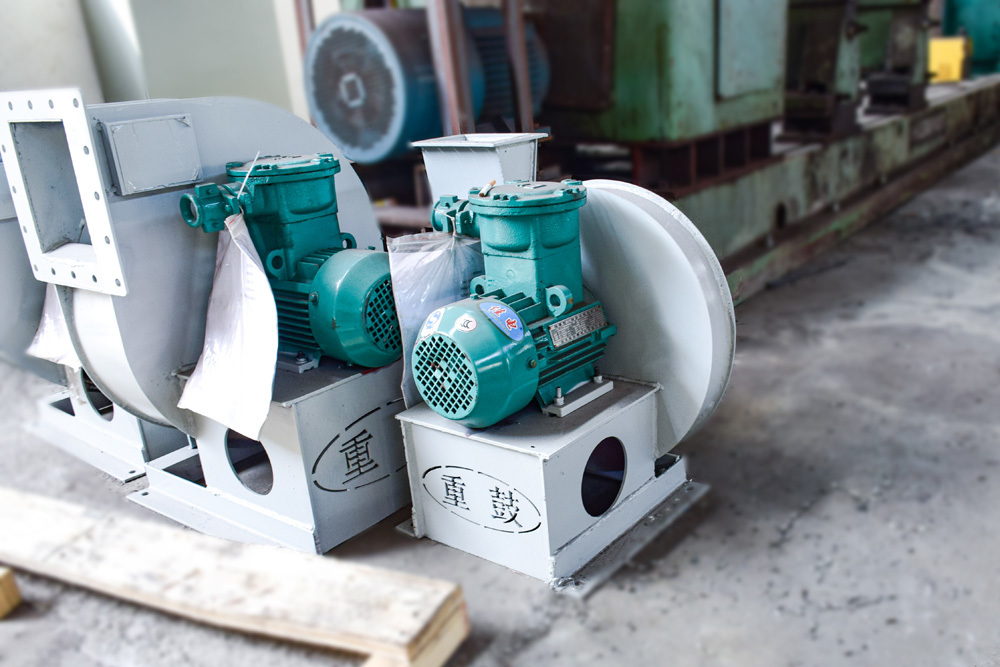
The Chongqing blower consists primarily of the following six components: the motor, the air filter, the blower body, the air chamber, the base (which also serves as the oil reservoir), and the oil drip nozzle. The blower operates by means of an eccentrically mounted rotor within the cylinder; as the rotor turns, the changing volume between the blades in the rotor slots draws in air, compresses it, and then discharges it.
The Chongqing blower consists primarily of the following six components: the motor, the air filter, the blower body, the air chamber, the base (which also serves as the oil reservoir), and the oil‑drip nozzle. The blower operates by means of an eccentrically mounted rotor within the cylinder; as the rotor turns, the changing volume between the blades in the rotor slots draws in air, compresses it, and then discharges it. During operation, the pressure differential of the blower automatically delivers lubricant to the oil‑drip nozzle, which drips into the cylinder to reduce friction and noise while preventing backflow of gases inside the cylinder. Blowers of this type are also known as sliding‑vane blowers.
The Chongqing blower consists primarily of the following six components: the motor, air filter, blower body, air chamber, base (which also serves as an oil reservoir), and oil‑drip nozzle. The blower operates by means of an eccentrically mounted rotor within the cylinder; as the rotor turns, the volume between the blades in the rotor slots expands and contracts, drawing in air, compressing it, and discharging it. During operation, the pressure differential generated by the blower automatically delivers lubricant to the oil‑drip nozzle, which drips into the cylinder to reduce friction and noise while preventing backflow of gases inside the cylinder. Blowers of this type are also known as sliding‑vane blowers. The medium conveyed by these blowers is predominantly clean air, clean coal gas, sulfur dioxide, and other inert gases. Customized production is available to handle other flammable, explosive, corrosive, toxic, or specialized gases as required.
A device that transfers energy to a continuously flowing fluid by the dynamic action of rotating blades on an impeller, or that drives the rotation of blades using energy conveyed by the fluid, is called an impeller machine. In such machines, the rotating blades perform positive or negative work on the fluid, thereby increasing or decreasing its pressure. Impeller machines are classified into two main categories: one is the working machine, in which the fluid absorbs power and gains head or hydraulic head—examples include centrifugal pumps and fans; the other is the prime mover, in which the fluid expands, reducing its pressure or hydraulic head while generating power—examples include steam turbines and water turbines. The prime movers are referred to as turbomachinery, whereas the working machines are known as turbomachines for fluids.
According to their operating principles, fans are classified into two major types: impeller-type and positive-displacement. Impeller-type fans can be further subdivided into axial-flow, centrifugal, and mixed-flow types. Based on the pressure they generate, fans are also categorized as blowers, compressors, and ventilators. Under China’s current mechanical industry standard JB/T 2977-92, a ventilator is defined as a fan whose outlet pressure (gauge pressure) is less than 0.015 MPa under standard air inlet conditions; a blower is one with an outlet pressure (gauge pressure) between 0.015 MPa and 0.2 MPa; and a compressor is one with an outlet pressure (gauge pressure) exceeding 0.2 MPa.
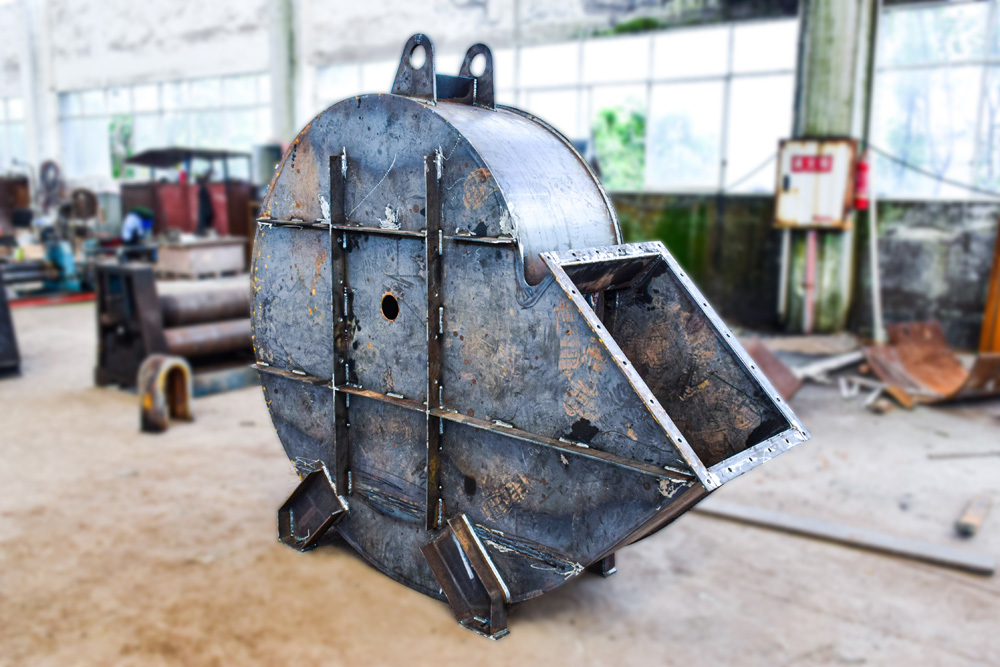
The main components of a Chongqing blower include the volute, the inlet collector, and the impeller.
Key words:- 重庆鼓风机
Leave a message for inquiry
Thank you for visiting. If you have any other questions, please leave us a message, and we’ll get back to you as soon as possible!
Chongqing Zhonggu Blower Co., Ltd.
National Service Hotline:
023-67657723/023-67657724
023-45267099/023-45262099
Business Phone:
023-67657723/023-67666438/023-67662725
Technical Department:023-67662824
Finance Department:023-67666428
Fax:023-67662824/023-45268099
Email:cqgfjc@cqgfjc.com
Address: Floors 1–4, Building 1, No. 1 Yudai Mountain, Liangjiang New Area, Chongqing City
Production Address: No. 66, Industrial Avenue, Tongliang District, Chongqing City
Scan to browse the mobile website
Online Customer Service