Chongqing Zhonggu Blower Co., Ltd. welcomes you!


Product Showcase
PRODUCTS
Product
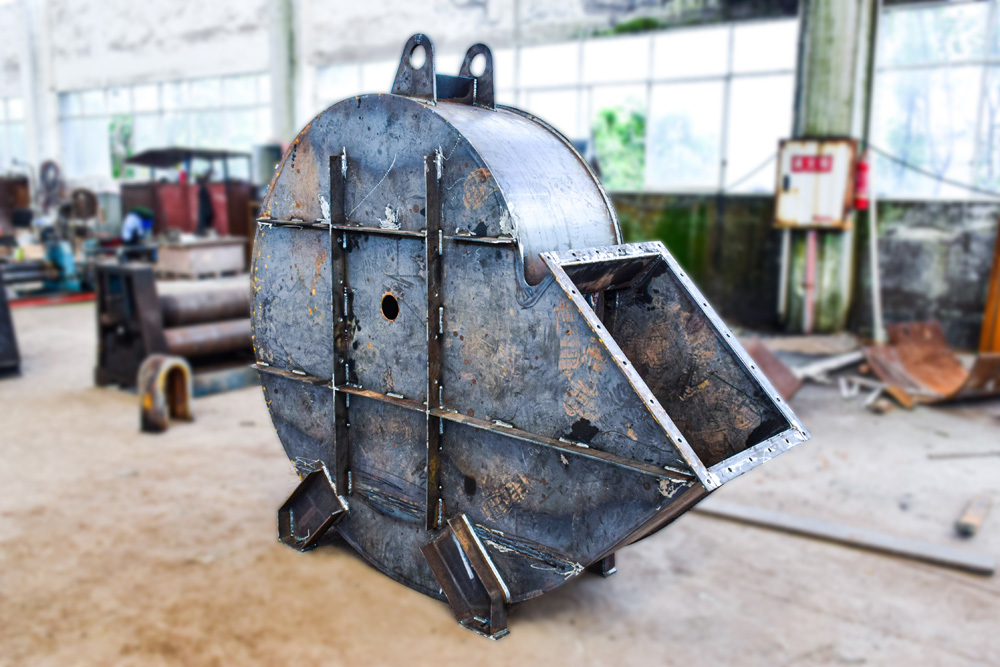
A fan is a machine that uses mechanical energy to increase gas pressure and convey gas; it is a type of driven fluid‑handling device. In China, “fan” is the conventional shorthand for gas‑compression and gas‑transport machinery. The term typically encompasses ventilators, blowers, and wind turbines. Fans are widely employed in factories, mines, tunnels, cooling towers, vehicles, ships, and buildings for ventilation, dust removal, and cooling; for ventilation and draft induction in boilers and industrial furnaces; for cooling and ventilation in air‑conditioning systems and household appliances; for grain drying and conveying; and for providing airflow in wind tunnels as well as inflating and propelling hovercrafts.
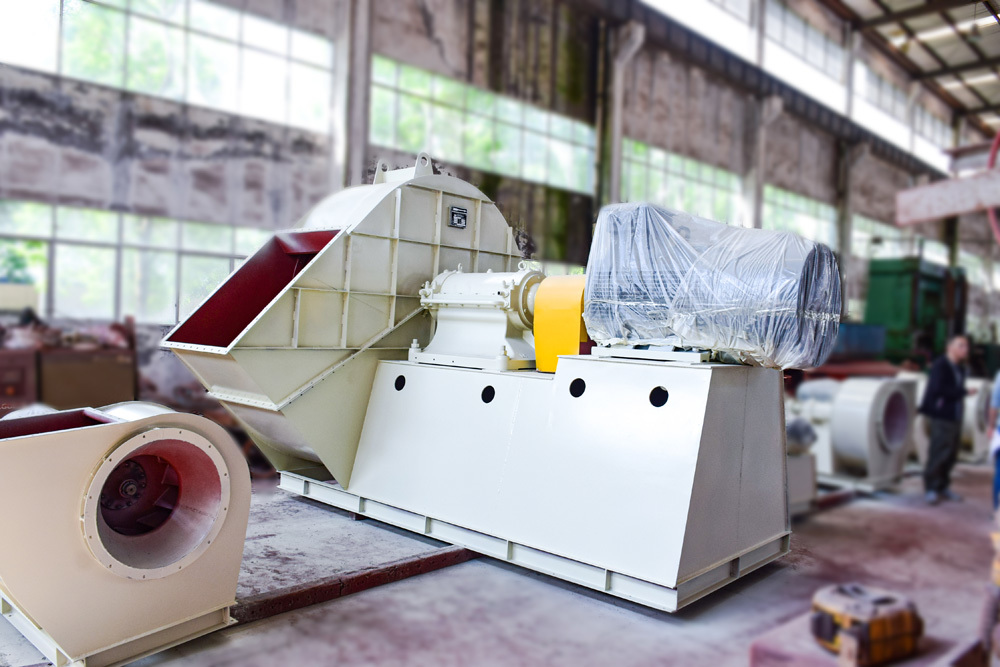
Industrial centrifugal fans are simply a general term for fans used in industrial applications. Depending on the user’s specific requirements and operating conditions, they may be referred to by different names. An industrial centrifugal fan operates on the principle of converting kinetic energy into potential energy: a high-speed rotating impeller accelerates the gas, which is then decelerated and redirected, thereby transforming kinetic energy into pressure (potential) energy. In a single-stage centrifugal fan, gas enters the impeller axially, changes to a radial flow as it passes through the impeller, and then enters the diffuser. Within the diffuser, the change in flow direction causes deceleration, and this deceleration converts kinetic energy into pressure energy. The primary increase in pressure occurs within the impeller, with a secondary contribution from the diffuser. In multi‑stage centrifugal fans, a return channel directs the airflow into the next impeller stage, enabling the generation of higher pressures.
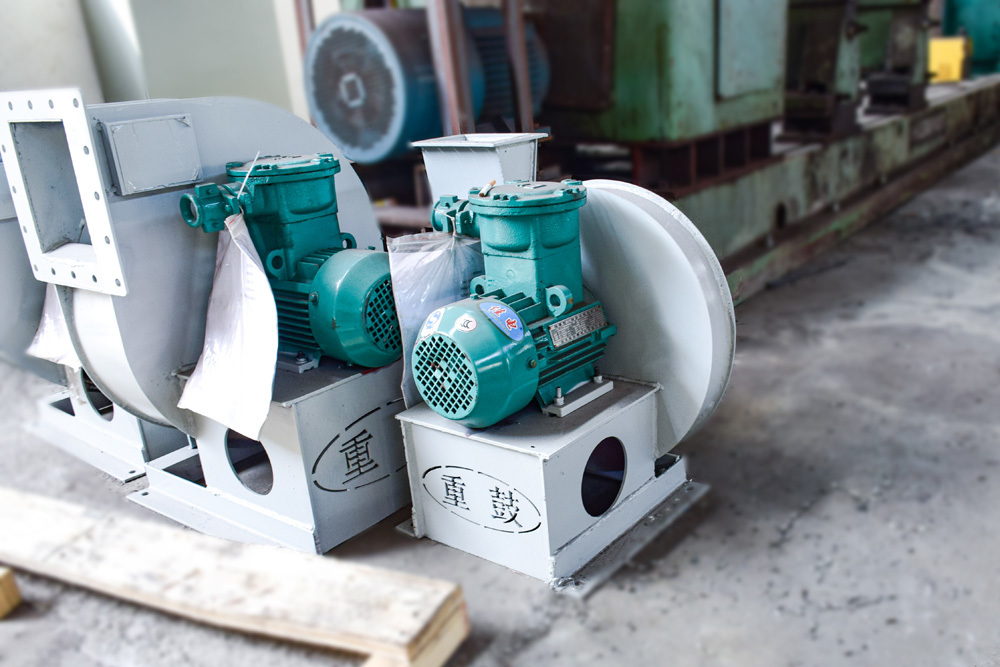
Industrial centrifugal fans are widely used for ventilation, dust removal, and cooling in factories, mines, tunnels, cooling towers, vehicles, ships, and buildings; for ventilation and draft induction in boilers and industrial furnaces; for cooling and ventilation in air-conditioning systems and household appliances; for drying and conveying grains; and for providing airflow in wind tunnels as well as inflating and propelling hovercrafts.
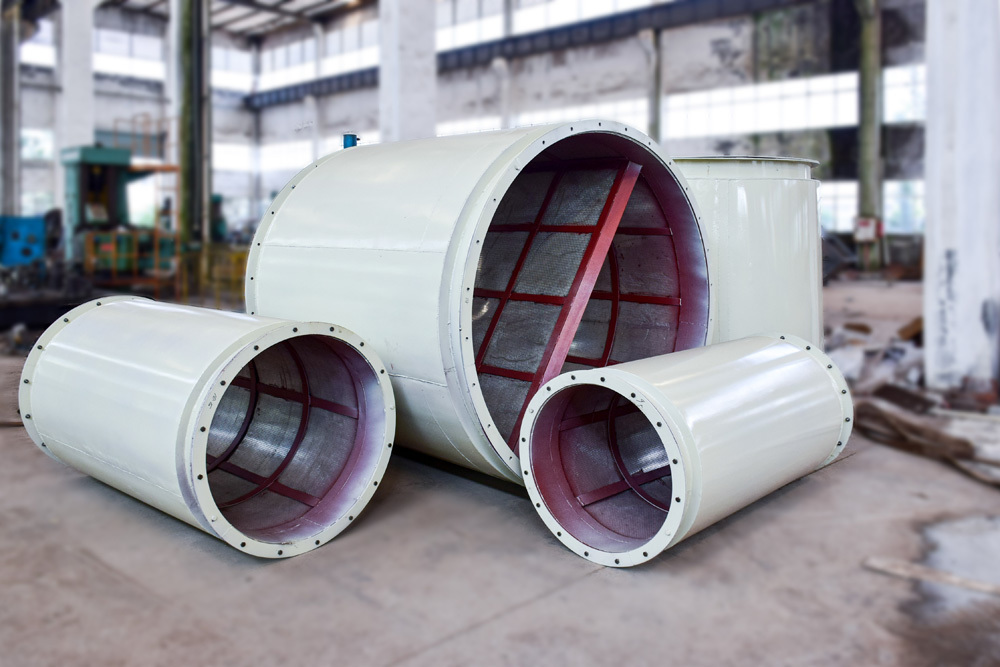
Industrial centrifugal fans are simply a general term for fans used in industrial applications. Depending on the user’s specific requirements and operating conditions, they may be referred to by different names. An industrial centrifugal fan operates on the principle of converting kinetic energy into potential energy: a high-speed rotating impeller accelerates the gas, which is then decelerated and redirected, thereby transforming kinetic energy into pressure (potential) energy. In a single-stage centrifugal fan, gas enters the impeller axially, changes to a radial flow as it passes through the impeller, and then enters the diffuser. Within the diffuser, the change in flow direction causes deceleration, and this deceleration converts kinetic energy into pressure energy. The primary increase in pressure occurs within the impeller, with a secondary contribution from the diffuser. In multi‑stage centrifugal fans, a return channel directs the airflow into the next impeller stage, enabling the generation of higher pressures.
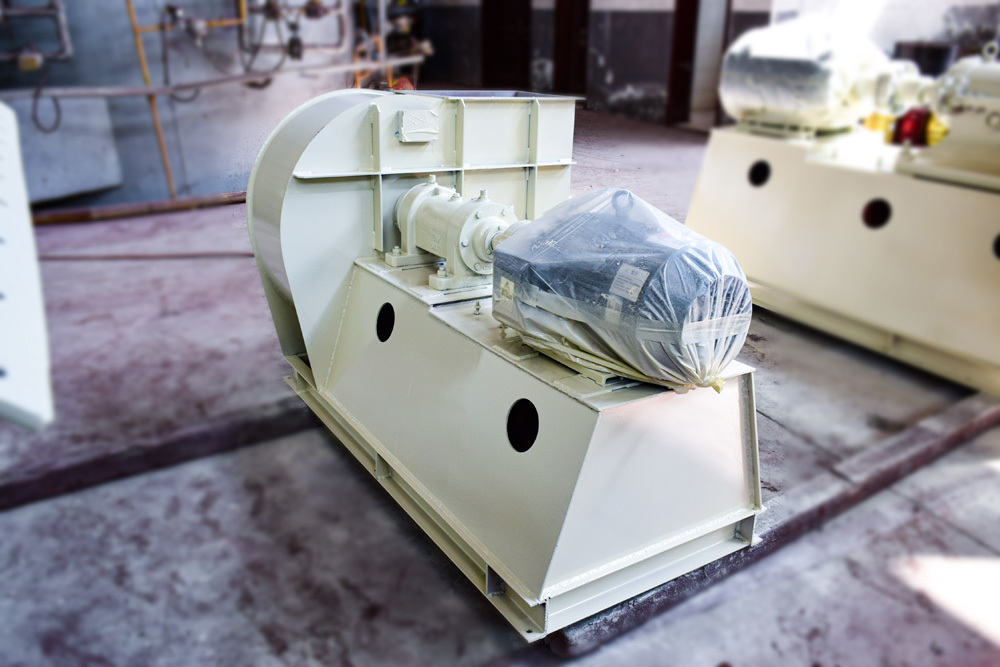
A fan is a machine that uses mechanical energy to increase gas pressure and convey gas; it is a type of driven fluid‑handling device. In China, “fan” is the conventional shorthand for gas‑compression and gas‑transport machinery. The term typically encompasses ventilators, blowers, and wind turbines. Fans are widely employed in factories, mines, tunnels, cooling towers, vehicles, ships, and buildings for ventilation, dust removal, and cooling; for ventilation and draft induction in boilers and industrial furnaces; for cooling and ventilation in air‑conditioning systems and household appliances; for grain drying and conveying; and for providing airflow in wind tunnels as well as inflating and propelling hovercrafts.
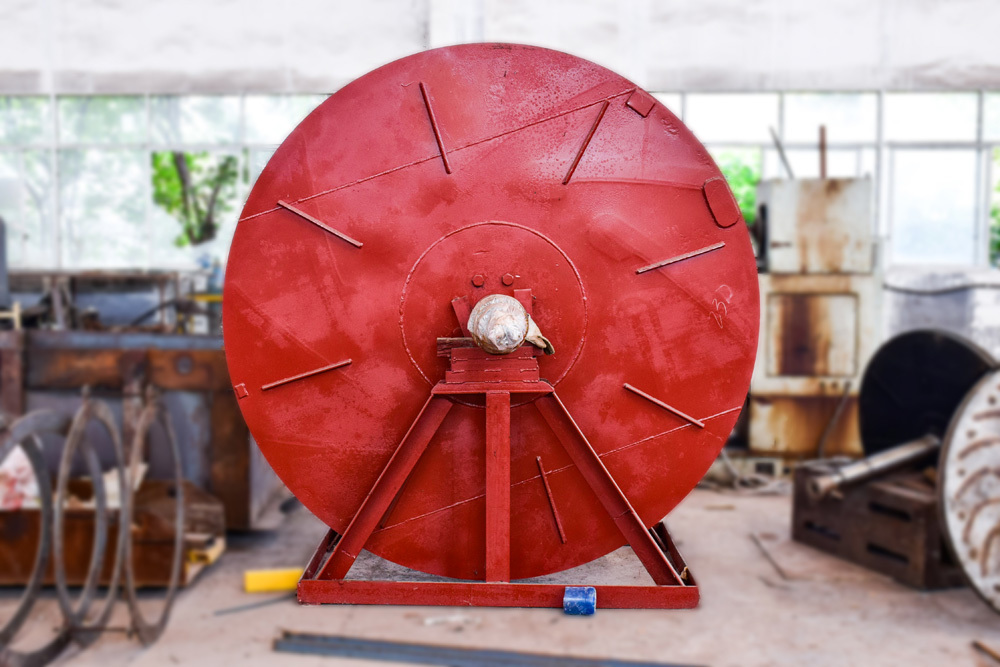
A centrifugal fan is a machine that, by means of mechanical energy input, increases gas pressure and conveys gas; it is a type of driven fluid‑handling machinery. Centrifugal fans are widely used for ventilation, dust removal, and cooling in factories, mines, tunnels, cooling towers, vehicles, ships, and buildings; for ventilation and draft in boilers and industrial furnaces; for cooling and ventilation in air‑conditioning equipment and household appliances; for drying and conveying grains; and for providing wind‑tunnel airflow as well as inflating and propelling hovercrafts.
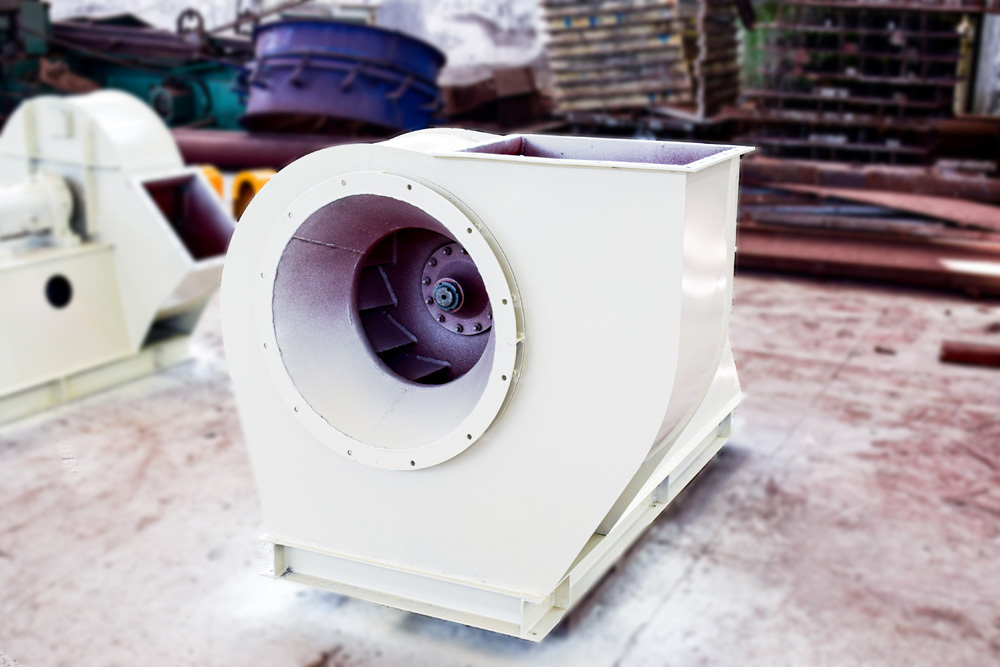
Industrial centrifuge for products
A fan is a machine that uses mechanical energy to increase gas pressure and convey gas; it is a type of driven fluid‑handling device. In China, “fan” is the conventional shorthand for gas‑compression and gas‑transport machinery. The term typically encompasses ventilators, blowers, and wind turbines. Fans are widely employed in factories, mines, tunnels, cooling towers, vehicles, ships, and buildings for ventilation, dust removal, and cooling; for ventilation and draft induction in boilers and industrial furnaces; for cooling and ventilation in air‑conditioning systems and household appliances; for grain drying and conveying; and for providing airflow in wind tunnels as well as inflating and propelling hovercrafts.

High-Temperature Blower for Waste Salt Incineration
A high-temperature fan is a fan device capable of operating reliably in high-temperature environments. It is widely used in various industrial applications that require hot air, such as heat treatment and combustion processes. Heat treatment involves altering the physical properties of materials through heating and cooling to enhance characteristics like hardness and toughness. During heat treatment, high-temperature fans play a crucial role by delivering hot air uniformly into the furnace, ensuring even heating of the material and achieving the desired processing results.

Fan Manufacturing: GDF Duct Fan, Silenced Type
Fan manufacturer: A fan is a machine that uses mechanical energy to increase gas pressure and convey gas; it is a type of driven fluid machinery. In China, “fan” is the conventional abbreviation for gas‑compression and gas‑transportation machinery. The term “fan” as commonly used encompasses ventilators, blowers, and wind turbines.
Fan Manufacturing: Duct-Type GDF Duct Fan
Fan manufacturer: A fan is a machine that uses input mechanical energy to increase gas pressure and convey gas; it is a type of driven fluid machinery. Fans are widely used for ventilation, dust removal, and cooling in factories, mines, tunnels, cooling towers, vehicles, ships, and buildings; for ventilation and draft in boilers and industrial furnaces; for cooling and ventilation in air-conditioning equipment and household appliances; for drying and conveying grains; and for providing wind sources in wind tunnels as well as for inflating and propelling hovercrafts.

Firefighting Smoke Exhaust Fan Unit: HLF-6 Low-Noise Mixed-Flow Fan Unit
The HTF fire‑exhaust fan is part of the HTF(A) series and features a multi‑objective optimized design developed using CAD software. It is equipped with a molded axial‑flow impeller, an integrated high‑temperature motor, and a dedicated motor cooling system. A dual‑speed motor with direct‑drive transmission enables dual functionality—providing routine ventilation and, in emergency situations, high‑temperature smoke extraction. When fitted with an electrical control cabinet, it can be operated remotely and automatically.
High-Efficiency, Energy-Saving Fan: HLF-6 Low-Noise Mixed-Flow Fan Unit
High-efficiency, energy-saving fans involve retrofitting the fan with variable-frequency drive (VFD) control. After such modifications, the fan can achieve a certain level of energy savings, typically ranging from 20% to 50%.
Chongqing Zhonggu Blower Co., Ltd.
National Service Hotline:
023-67657723/023-67657724
023-45267099/023-45262099
Business Phone:
023-67657723/023-67666438/023-67662725
Technical Department:023-67662824
Finance Department:023-67666428
Fax:023-67662824/023-45268099
Email:cqgfjc@cqgfjc.com
Address: Floors 1–4, Building 1, No. 1 Yudai Mountain, Liangjiang New Area, Chongqing City
Production Address: No. 66, Industrial Avenue, Tongliang District, Chongqing City
Scan to browse the mobile website

Online Customer Service